 AsclepiosAnalog space mission
WBA Eurohab
The World’s Biggest Analog (WBA) is the world’s first major multihabitat simulation, a simultaneous mission including 16 lunar or Martian habitats on nearly every continent of the globe. The project has several goals: it is a proof of concept for such a large mission; it connects over 200 researchers for a unique opportunity to gather a large body of relevant scientific data, and it enables space-related public outreach in communities around the world.
WBA Mission Report
Eurohab
Spartan Space and Asclepios joined forces as part of the WBA simulation for a 4-day mission from October 17th to 21st, 2025. Two crews of two analogue astronauts each spent 48 hours (two days and two nights) inside of Spartan Space’s EUROHAB habitat, designed to be a short-term occupancy lunar outpost.

The Eurohab crews
MSc Space Engineering at TU Delft
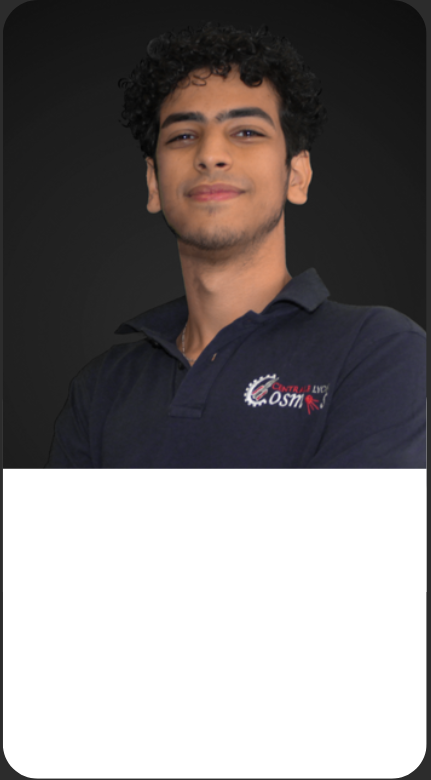
MSc in Avionics at TUM and Ecole Centrale de Lyon

MSc in Aerospace Engineering, ISAE-SUPAERO
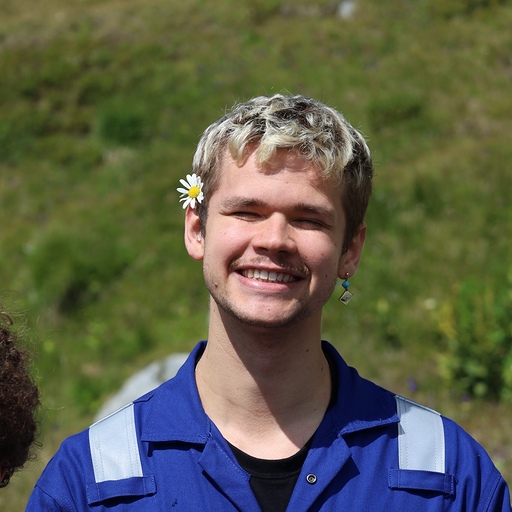
PhD in Aerospace Palaeomimicry, University of Manchester
Scientific experiments
This experiment tests the BuddySpace platform, aimed at evaluating the effectiveness of a virtual psychological buddy – represented by a conversational avatar – in providing emotional support to subjects under conditions of prolonged isolation, similar to those of a space mission. The buddy is customised on the basis of psychometric data, individual profiles and interacts daily with each participant to promote well-being and emotional regulation.

The aim of the study is to identify key emotional dynamics within the astronauts’ experience, distinguishing between motivational and hazardous factors, create a conceptual model and offer recommendation for future space missions design to improve the astronauts’ mental health.
The research examines changes in cognitive representations and knowledge used in individual decision making. Core crewmembers are compared to backup crewmembers across pre-, during-, and post-mission phases. The findings will contribute to developing countermeasures for space missions and other high-stress environments, as well as public outreach initiatives. The main objective is to investigate whether and how individuals’ knowledge and representations of a decision problem change during isolation.
This project aims to investigate the daily use of job, home, and team crafting behaviors and their relationship with astronaut health and well-being. Specifically, it examines how sustainable crafting behaviors can mitigate exhaustion, a critical factor for astronaut health. Furthermore, improved performance and engagement through crafting can reduce errors and enhance team safety. By understanding the link between crafting and well-being, this study seeks to promote effective interventions, such as brief activities, that foster crafting behaviors. This could empower astronauts to integrate their skills and needs into their work and living environment, ultimately contributing to the success of Mars missions by enhancing their mental health, well-being, and performance in response to high autonomy.

Using creative methods such as journaling and photography, this study delves into the transformation of identity that astronauts experience during space missions. It asks: how does one redefine the “self” when disconnected from Earth?
The research aims to explore the positive psychological effects experienced by individuals in isolated, confined, and extreme (ICE) environments, such as space analog missions. The study contributes to the growing body of work on salutogenesis, which focuses on factors that promote well-being rather than simply mitigating stress.
Our missions
 Asclepios VI2026
  WBA Eurohab2025
  Asclepios V2025
  Asclepios IV2024
  Asclepios III2023
  Asclepios II2022
  Asclepios I2021